
Do OnlyFans Creators Pay Tax? What You Owe in 2026
Do OnlyFans creators pay tax? Yes. OnlyFans income is taxable self-employment income in both the UK and the US, and since 2024 the platform reports what you earn to the tax authority on its own, whether or not you file. The question most creators actually mean is narrower: how much do you owe once it starts, and what happens if you treat the money as invisible. Here is the honest answer, with the thresholds that matter and the risks that catch people who assumed a stage name kept them off the record.
Do OnlyFans creators pay tax?
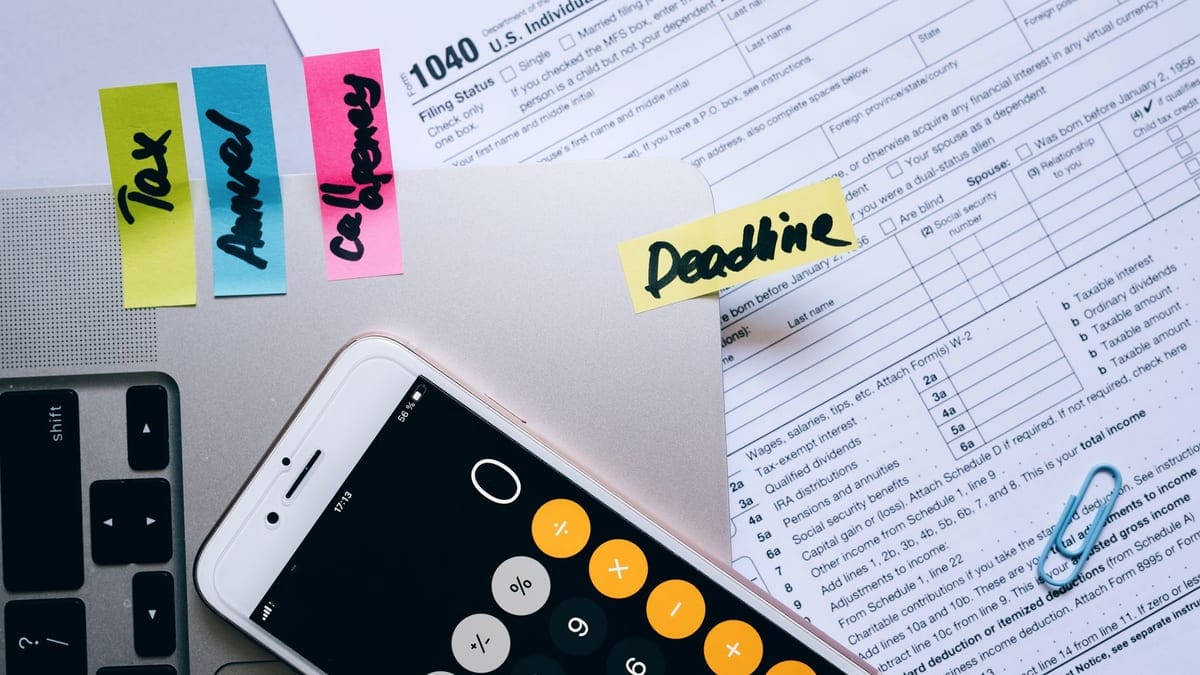
Money earned on OnlyFans is business income, not a gift or a hobby windfall, and tax authorities treat it the same way they treat any self-employment earnings. In the UK it is taxed through Self Assessment as self-employment income. In the US it goes on Schedule C alongside your Form 1040, with self-employment tax on top of ordinary income tax. The 20% the platform keeps does not change your obligation: you are taxed on what you earn, and in most cases the platform reports the gross figure, before its cut, to the authority. That gap between gross and net is where a lot of first-year tax bills come as a shock. Our full OnlyFans tax guide covers the mechanics for both countries; the short version is that yes, you owe tax, and the platform has already told the government you exist.
Does OnlyFans report your income to HMRC or the IRS?
This is the part that ends the anonymity most new creators assume. In the UK, the DAC7 digital-platform reporting rules have required OnlyFans to send creator earnings straight to HMRC since January 2024, for anyone with 30 or more transactions or earnings above roughly £2,000 in a year. HMRC matches that data against your Self Assessment automatically. In the US, OnlyFans issues a 1099-NEC to creators who pass the reporting threshold ($2,000 for tax year 2026), and the same figure goes to the IRS. A mismatch between what the platform reports and what you declare is what triggers a letter, an HMRC compliance check or an IRS CP2000 notice. The stage name on your profile does nothing here: the tax record is tied to your verified legal identity, not your handle.
How much tax do OnlyFans creators pay?
There is no separate OnlyFans tax rate. You pay the ordinary self-employment rates for your country, applied to your profit (income after allowable expenses), which is why two creators earning the same gross can owe very different amounts. The rough shape looks like this:
| Country | Taxes on OnlyFans profit | Roughly where it starts |
|---|---|---|
| UK | Income tax (20/40/45%) plus Class 4 National Insurance (6% then 2%) | Above the £12,570 personal allowance; register once trading income tops £1,000 |
| US | Federal income tax (by bracket) plus 15.3% self-employment tax, plus any state tax | From the first dollar of profit; quarterly estimates once you owe |
As a rough illustration: a UK creator with £30,000 of profit sits in the basic-rate band, owing 20% income tax on earnings above the personal allowance plus 6% Class 4 National Insurance on the same slice, a combined marginal rate of 26% on that portion, not on the whole £30,000. A US creator with $30,000 of profit owes 15.3% self-employment tax (about $4,240 after the 92.35% adjustment and the deductible half) before federal and any state income tax is added. Neither figure is an "OnlyFans rate"; both are ordinary self-employment tax applied to a creator's books.
To put real numbers against your own earnings, our OnlyFans tax calculator walks through the estimate, and the guide to the 1099-NEC explains why the form's number may not match your bank deposits.
What can you deduct to lower the bill?
Tax is charged on profit, not on the gross figure the platform reports, so genuine business expenses reduce what you owe directly. Both HMRC and the IRS accept costs that are wholly and exclusively for the business: production equipment (cameras, lighting, a dedicated phone), software and subscriptions, the platform's 20% commission, agency fees, content-protection and DMCA services, and a proportion of home and internet costs where a space is used for work. What both authorities reject is the same list creators most want to claim: gym memberships, cosmetic procedures, routine grooming, and everyday clothing, all of which fail the "wholly for the business" test because they carry an obvious personal benefit. Keeping receipts and a simple month-by-month record of gross earnings, platform fees, and expenses is what turns a stressful year-end into a short one, and it is the single habit that most reduces a first-timer's bill.
Do you pay tax if OnlyFans is just a side hustle?
Yes, though the first slice may be exempt. Side income is still taxable income, and "I have a day job" does not shelter it. UK creators get a £1,000 trading allowance: if your gross OnlyFans income for the year is under £1,000, you do not need to register or declare it, but the moment you cross that line the whole amount becomes taxable from the first pound and you must register as self-employed. US creators get no equivalent floor. Income under the $2,000 threshold simply means OnlyFans may not issue a 1099-NEC, not that the money is tax-free; it is fully taxable and you are expected to report it yourself. So do you have to pay tax on OnlyFans money from a small hobby account? Once it clears the allowance, yes, and the side-hustle framing is exactly the assumption that produces backdated bills.
What happens if you don't pay tax on OnlyFans income?
Ignoring it is the expensive path, because the reporting now runs automatically. When platform data does not match your return, HMRC and the IRS do not need to open an audit to notice: the cross-check is done by software. In the UK, penalties run from 0–30% of the tax owed for careless errors up to 100% for deliberate concealment, on top of the tax itself and interest, and HMRC can issue nudge letters or a formal check reaching back years. In the US, unpaid self-employment tax accrues failure-to-file and failure-to-pay penalties plus interest, and a CP2000 notice adds a 20% accuracy penalty on the underreported amount. None of this is discretionary once the numbers are on file.
The banking side compounds it: adult-industry income already sits under extra scrutiny from payment providers, as our look at how OnlyFans payouts work shows, so a tax problem and a frozen payout can land in the same month.
The part creators underestimate
The real lesson in the OnlyFans tax question is not the rate. It is that the platform sits between you and the tax authority and reports the gross number on your legal identity, before you see a penny of your cut. You owe tax on money the platform has already taken 20% from, calculated on a figure you did not choose how to present. Running the business yourself does not remove the tax, because income is income wherever it lands, but it does change who controls the records: your own books and your own gross-to-net trail, plus your own accountant, instead of reconciling against a form a platform formatted for you. Taxes on OnlyFans are unavoidable. What is optional is whether you own the financial paper trail of your business or inherit someone else's version of it.
Whether you're on OnlyFans, Fansly, Fanvue or building independently, Heduno gives creators the tools to run their business their way. Start building on Heduno
Run the numbers on a platform you own.
Heduno takes the same industry-standard cut as everywhere else. The upside is what you keep control of.
Newsletter
Get insights in your inbox.
Related Articles
OnlyFans Tax Guide 2026 (UK & US Creators)

OnlyFans Agencies in 2026: How They Work and How to Pick One